
MotoGP riders are some of the most specialized athletes on the planet, piloting 300-horsepower prototype motorcycles at speeds exceeding 220 mph. To the casual observer, it may look like the machine is doing the heavy lifting, but controlling these violent, highly responsive vehicles requires superhuman physical strength, split-second cognitive processing, and immense emotional control. Understanding what goes into their training, career progression, and on-track challenges reveals why only a select few ever reach this pinnacle of motorsport.
Key Takeaways
- Extreme Physical Demands: Riders experience up to 1.5g to 2g of deceleration under braking, requiring exceptional core, neck, and forearm strength.
- The Progression Ladder: The road to MotoGP is highly structured, typically requiring successful stints in Moto3 and Moto2.
- High-Tech Adaptability: Modern riders must manage complex electronics, ride-height devices, and aerodynamic changes on the fly.
- Risk and Recovery: Injuries are a constant threat, and managing physical rehabilitation is a core component of a rider's career longevity.
The Extreme Physical Demands of MotoGP Racing
During a 45-minute Grand Prix race, a rider's heart rate averages between 170 and 190 beats per minute, comparable to a marathon runner sprinting the final mile. However, unlike a runner, a motorcycle racer must simultaneously wrestle a 157-kilogram (346 lbs) machine through high-speed directional changes while resisting massive aerodynamic and braking forces.
The physical strain concentrates on several key areas:
- The Upper Body and Forearms: Braking from 220 mph down to 60 mph in a matter of seconds requires riders to brace their entire body weight against the handlebars. This intense pressure frequently leads to "arm pump" (chronic exertional compartment syndrome), a painful condition where blood flow is restricted in the forearms.
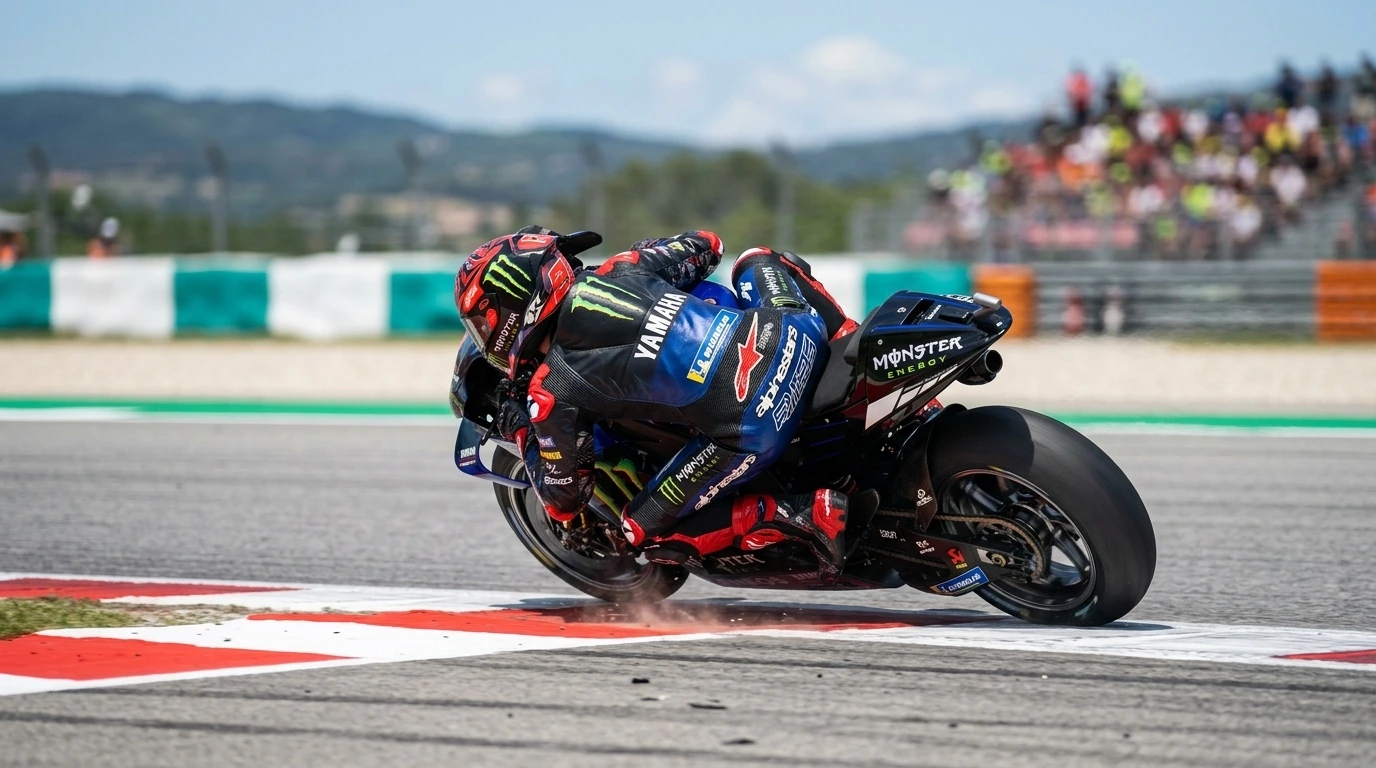
- Core Stability: To achieve lean angles of up to 64 degrees, riders hang completely off the side of the bike. They use their core, lower back, and thighs to cling to the tank and transition the bike from side to side during rapid chicanes.
- Thermoregulation: Clad in thick, armored kangaroo leather suits, riders lose up to three liters of sweat during hot flyaway races in places like Malaysia or Indonesia, risking severe dehydration and cognitive decline.
Training Regimes Off the Track
Because riding an actual MotoGP bike outside of official race weekends is strictly prohibited by testing regulations, riders must find alternative ways to maintain fitness. Most combine high-intensity cardiovascular training, such as road cycling or running, with functional strength training that emphasizes stability over bulk.
To keep their riding reflexes sharp, they frequently train on dirt tracks, motocross bikes, or smaller supermoto motorcycles. Dirt training forces riders to manage traction loss at lower, safer speeds, honing the instinctual throttle control needed when a 300-hp MotoGP bike slides at high speed.
Pro Tip: Aspiring racers often focus solely on gym work, but track time on flat-track or motocross bikes is far more valuable for developing the muscle memory and slide-management skills required to control a premier-class machine.
The Road to MotoGP: The Grand Prix Ladder
The path to the premier class is highly competitive. Almost all modern riders start in national championships (like the FIM JuniorGP) before entering the official Grand Prix ladder, which consists of three distinct tiers. Each step features escalating power, weight, and complexity.
| Class | Engine Type / Specs | Approx. Horsepower | Minimum Weight | Top Speed |
|---|---|---|---|---|
| Moto3 | 250cc single-cylinder 4-stroke | 60 hp | 152 kg (with rider) | 155 mph (250 km/h) |
| Moto2 | 765cc 3-cylinder (Triumph spec) | 140 hp | 217 kg (with rider) | 185 mph (298 km/h) |
| MotoGP | 1000cc 4-cylinder prototype | 250 - 300+ hp | 157 kg (bike only) | 225+ mph (363+ km/h) |
The transition between these classes involves more than just managing extra power. Moto3 rewards high corner speed and aggressive slipstream tactics. Moto2 introduces heavier bikes with more torque, teaching riders how to manage rear-wheel slide under acceleration. Finally, MotoGP introduces carbon fiber brakes, advanced aerodynamics, and complex electronics like traction control, anti-wheelie, and ride-height devices.
Real-World Challenges: Two Rider Scenarios
To understand the challenges modern MotoGP riders face, let us look at two common career scenarios:
Scenario A: The Moto2 Graduate Adapting to MotoGP Electronics
A rookie enters MotoGP after dominating Moto2. Despite their raw speed, they struggle in their first few races. In Moto2, the bikes have minimal rider aids, requiring the rider to manage rear grip entirely with their wrist. In MotoGP, the bike features complex electronics that must be tailored for every corner. If the rider fights the electronics instead of trusting the traction control and engine braking maps, they will overheat the Michelin tires and quickly fall off the pace.
Scenario B: The Mid-Season Injury Dilemma
A factory rider crashes during Friday practice and fractures their collarbone. With races scheduled on back-to-back weekends, the rider faces immense pressure. If they sit out for three races to heal fully, their championship hopes are over, and they risk losing their seat to a hungry test rider. Consequently, they undergo surgery to have a titanium plate inserted on Friday night, returning to the track on Sunday to salvage whatever points they can, riding through agonizing pain and relying on heavy physiotherapy.
The Financial and Contractual Reality
The financial spectrum in MotoGP is vast. While elite multi-time world champions can command base salaries in the range of $5 million to $10 million annually, riders on satellite teams or rookies might earn closer to $150,000 to $300,000. These lower base salaries are heavily supplemented by performance-based bonuses for podiums, wins, and championship standings.
Furthermore, MotoGP contracts are notoriously volatile. Most riders sign two-year agreements, creating a high-pressure environment during "silly season" (the period when contracts are renegotiated). A poor run of form over just three or four races can permanently derail a rider's career, as teams are always looking to promote the next young talent from Moto2.
Common Mistakes and Pitfalls in Career Development
Even highly talented riders can fail to reach their potential due to common career missteps:
- Rushing the Classes: Moving from Moto3 to MotoGP too quickly can stunt a rider's development. Without learning how to manage a heavy bike in Moto2, young riders often struggle with the physical demands and complex dynamics of a 1000cc machine.
- Ignoring Bike Philosophy: Different manufacturers build bikes with vastly different riding philosophies. A rider who excels on a high-corner-speed inline-four machine (like the historic Yamaha M1) may struggle immensely if they switch to a point-and-shoot V4 machine (like the Ducati Desmosedici) which requires aggressive braking and squaring off corners.
- Poor Mental Management: Modern MotoGP is as much a psychological battle as a physical one. Riders who let early-season crashes or teammate rivalries affect their confidence often enter a downward spiral of poor performance.
Frequently Asked Questions
Do MotoGP riders use standard road bikes for training?
No. While they may use production sportbikes for track days, they primarily train on dirt track, motocross, or supermoto bikes to develop traction control instincts, as well as road bicycles for cardiovascular endurance.
What is "arm pump" and why do so many riders get it?
Arm pump occurs when the forearm muscles swell during intense braking, restricting blood flow. This causes numbness and loss of strength, often requiring a minor surgical procedure called a fasciotomy to relieve pressure.
How heavy are MotoGP bikes?
The minimum dry weight for a MotoGP bike is 157 kilograms (346 lbs). When fully fueled and loaded with fluids, they weigh around 170-180 kilograms.
How do riders communicate with their teams during a race?
Unlike Formula 1, there is no two-way radio communication in MotoGP. Riders rely on pit boards displayed on the straightaway and short text messages sent directly to their bike's dashboard by the team.
A Forward-Looking Perspective
The role of the MotoGP rider is changing. With the introduction of complex aerodynamics, ride-height devices, and sophisticated electronics, modern racers must be as analytical as they are brave. Success no longer depends solely on raw, natural talent; it requires a deep understanding of telemetry, tire management, and collaborative engineering. As the sport continues to push the boundaries of physics, the athletes who sit aboard these machines must continue to redefine the limits of human performance.