
For motorsport fans, keeping track of MotoGP race results is about far more than seeing who crosses the finish line first on Sunday. With the introduction of Saturday Sprints and highly complex team and constructor championships, understanding how points are distributed is crucial to following the title fight. This guide breaks down exactly how the modern MotoGP standings are calculated, how to read the results, and what to watch for as the season unfolds.
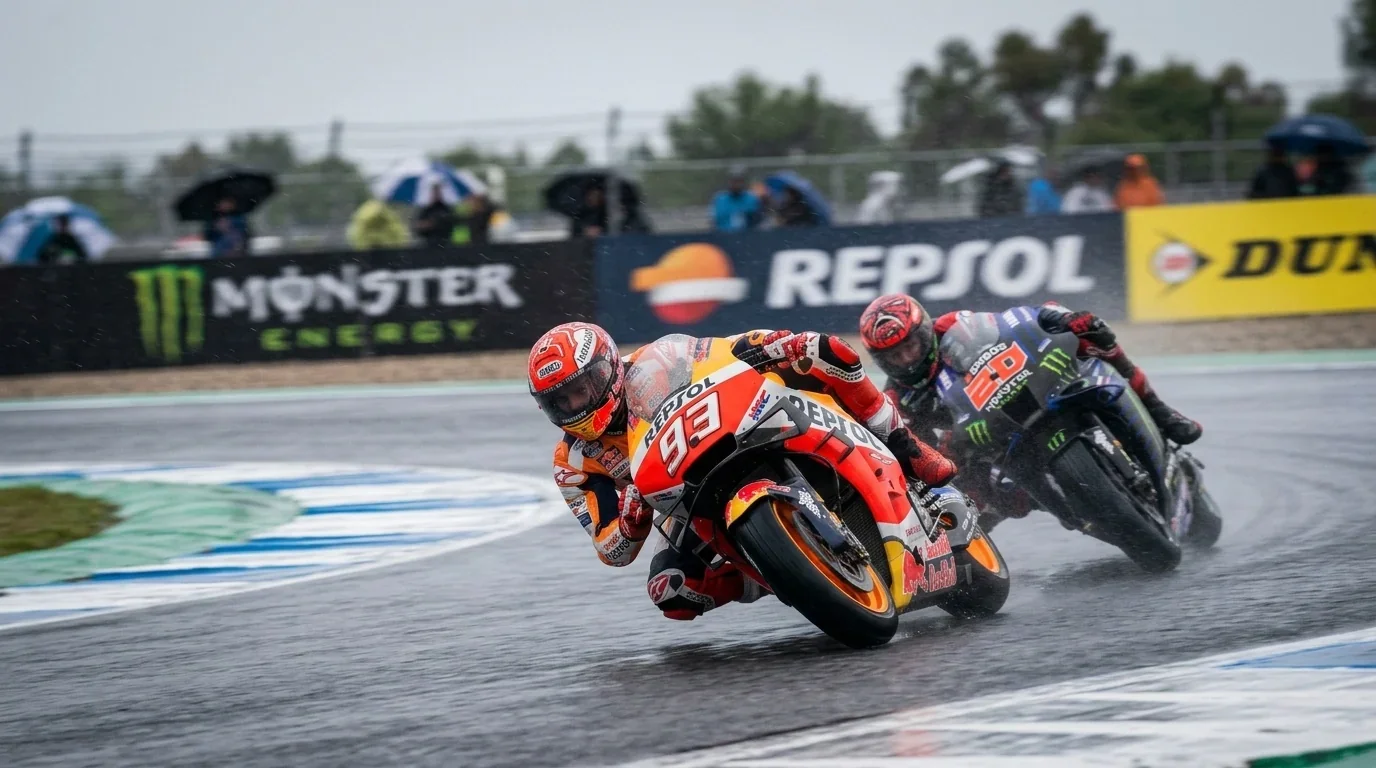
- Dual-Race Format: Championship points are awarded during both Saturday Sprints and Sunday Grand Prix races, drastically altering title strategies.
- Grand Prix Scale: The Sunday race remains the primary points haul, offering 25 points to the winner down to 1 point for 15th place.
- Three Distinct Titles: Riders, Teams, and Constructors each battle for separate championship trophies with unique scoring rules.
- Consistency is King: With up to 37 points available every weekend, minimizing crashes and scoring regular points is more vital than ever.
The Structure of a MotoGP Race Weekend
To fully comprehend the championship standings, one must first understand how a modern Grand Prix weekend is structured. The schedule is designed to build tension, with every session on the track directly impacting a rider's championship aspirations.
On Friday, riders take to the track for Practice sessions. The times set in these sessions are critical; the top ten fastest riders secure a direct pass to Qualifying 2 (Q2) on Saturday. Those who finish outside the top ten must compete in Qualifying 1 (Q1), where only the top two fastest riders earn the right to move up to Q2. Qualifying eventually determines the starting grid for both the Saturday Sprint and the Sunday Grand Prix.
The Saturday Sprint is a half-distance race that offers quick, aggressive racing with fewer points on the line. Sunday hosts the traditional, full-distance Grand Prix, which requires careful tire management, strategic fuel usage, and deep physical endurance. Because the grid remains the same for both races, a strong qualifying performance is the foundation of a successful weekend.
How MotoGP Points Are Awarded: Grand Prix vs. Sprint
The points system in MotoGP reward depth and consistency. While winning is the ultimate goal, securing minor points positions during a tough weekend often decides who takes home the world championship trophy at the end of the year.
Points are distributed down to 15th place on Sunday, whereas only the top nine riders score points during the Saturday Sprint. The table below outlines the exact points distribution for both events:
| Position | Sunday Grand Prix Points | Saturday Sprint Points |
|---|---|---|
| 1st | 25 | 12 |
| 2nd | 20 | 9 |
| 3rd | 16 | 7 |
| 4th | 13 | 6 |
| 5th | 11 | 5 |
| 6th | 10 | 4 |
| 7th | 9 | 3 |
| 8th | 8 | 2 |
| 9th | 7 | 1 |
| 10th | 6 | 0 |
| 11th to 15th | Decrements from 5 to 1 | 0 |
Beyond the Rider Standings: Teams and Constructors
While fans naturally focus on the individual riders, MotoGP also crowns two other champions every season: the Constructors and the Teams. These standings are calculated using different rules, which can sometimes lead to confusing results for casual viewers.
The Constructor Championship focuses purely on the machinery. Only the highest-placed motorcycle of each manufacturer scores points in any given race. For instance, if Manufacturer A finishes 1st, 2nd, and 3rd on Sunday, Manufacturer A only receives 25 points for that race. The remaining points from the other riders are ignored for the constructor standings, allowing manufacturers with fewer bikes on the grid to remain competitive in the manufacturer table.
The Team Championship, on the other hand, is a collective effort. It sums the total points scored by both official riders of a specific team. If a rider is injured and replaced by a test rider, any points scored by that replacement rider also count toward the Team Championship. This makes the team title a true reflection of organizational depth and mechanical reliability.
Pro Tip: When analyzing the standings, look at the ratio of Sprint-to-GP points. A rider who excels in the short, high-intensity Sprint (where tire management is less critical) might climb the standings quickly, but long-term title contenders must have the race pace and tire conservation skills required to win the full-distance Sunday Grand Prix.
Two Practical Scenarios: How Standings Shift
To understand how these rules play out in a real championship battle, let us look at two distinct rider profiles over a single race weekend.
Scenario 1: The Sprint Specialist. Rider A is exceptionally fast over a single lap. He qualifies on pole position, wins the Saturday Sprint (earning 12 points), but struggles with heavy tire wear during Sunday's long race, ultimately dropping down to 8th place (earning 8 points). His total haul for the weekend is 20 points.
Scenario 2: The Sunday Specialist. Rider B qualifies 8th on the grid. He finishes a quiet 6th in the Sprint (4 points). However, during Sunday's Grand Prix, his smooth riding style allows him to preserve his rear tire, slicing through the field to finish 2nd (20 points). His total haul for the weekend is 24 points.
Despite Rider A taking a victory on Saturday, Rider B walks away from the weekend with more championship points. This dynamic shows why consistency and race management on Sunday remain the most critical factors in securing a world title.
Common Mistakes When Reading MotoGP Results
- Confusing Team and Constructor Standings: Remember that a manufacturer (like Ducati or KTM) may have multiple satellite teams running their bikes. The Constructor standings only count the single best bike, while Team standings count the combined efforts of specific two-rider garages.
- Ignoring Post-Race Penalties: Modern MotoGP features strict rules regarding tire pressure limits, track limits, and riding conduct. A rider might cross the finish line in 3rd place, but a post-race 3-second time penalty for low tire pressure could drop them to 6th in the official standings hours after the podium celebration.
- Assuming Qualifying Points Exist: Unlike some other motorsport series, MotoGP does not award points for securing pole position. Qualifying is strictly about track position for the races.
Where to Find Official and Real-Time Standings
For the most accurate and up-to-date results, fans should rely on the official MotoGP website and its timing application. Because technical inspections and steward decisions can alter results post-race, unofficial sources may sometimes publish premature standings before penalties are finalized.
Frequently Asked Questions
How many points does a MotoGP winner get?
A race winner receives 25 points for winning the Sunday Grand Prix and 12 points for winning the Saturday Sprint. A perfect weekend yields a maximum of 37 points.
Do Sprint race wins count as official Grand Prix victories?
No, Sprint wins are recorded in a separate historical category. Official "Grand Prix" wins are reserved strictly for Sunday race victories, though Sprint results do count directly toward the overall MotoGP Rider Championship standings.
What happens if there is a tie in the championship standings?
If two riders finish the season with the exact same number of points, the tie is broken by looking at the quality of their finishes. The rider with the most Sunday Grand Prix wins is crowned champion. If they are still tied, the number of second-place finishes is compared, and so on.
How do tire pressure rules affect the final race results?
Riders must run their tires above a minimum pressure limit for a specific percentage of the race. If a rider falls below this limit, they receive a post-race time penalty (usually 8 seconds for a Grand Prix), which often reshuffles the final results and championship standings after the race has concluded.
The Strategic Path to the Championship
The modern MotoGP format demands a delicate balance of raw speed and calculated risk. With 37 points on the table every weekend, a single crash or injury can completely derail a championship campaign. The riders who successfully challenge for the title are not always those who win the most races, but those who can salvage top-five finishes when their bikes are not performing perfectly. As you watch the season progress, keep an eye on how riders manage their weekends from Friday practice through to Sunday afternoon—because every single session plays a role in who eventually lifts the world championship trophy.