
To the uninitiated, a MotoGP racer is simply a passenger on a highly sophisticated missile. In reality, these athletes pilot 300-horsepower prototype motorcycles at speeds exceeding 220 mph, enduring physical and mental forces that rival fighter pilots. Understanding what happens beneath the leather suit reveals why MotoGP is widely considered the ultimate test of human and mechanical synergy.
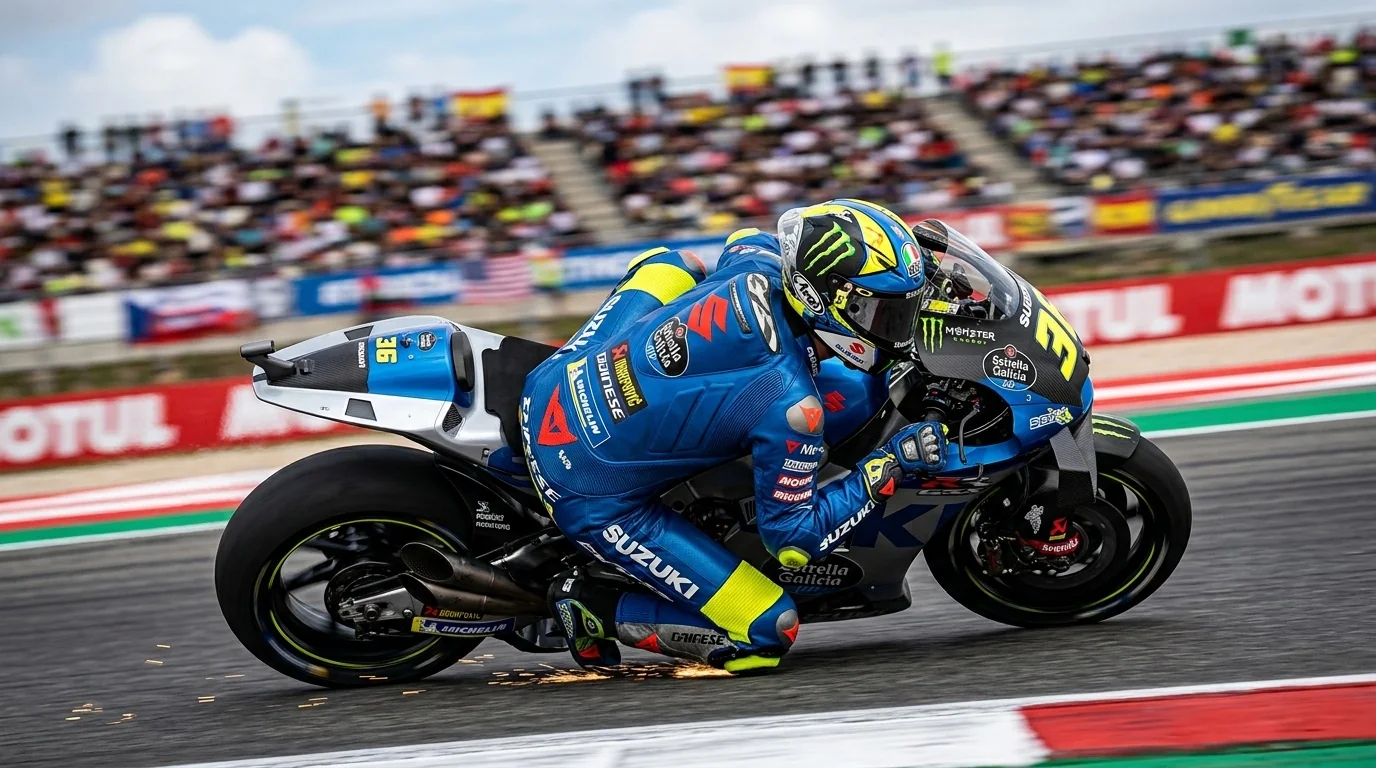
- Extreme Athleticism: Racers maintain heart rates of 170–190 bpm for 45 minutes while managing extreme G-forces.
- Complex Controls: Riders actively manipulate ride-height devices, engine braking maps, and traction control settings while cornering.
- Structured Pathway: Progression requires climbing a highly competitive ladder from junior championships through Moto3 and Moto2.
- Advanced Safety: Modern leather suits feature autonomous, GPS-triggered airbag systems that deploy before the rider hits the ground.
The Physical Toll of Riding a Prototype Beast
To control a machine that weighs a mere 157 kilograms (346 pounds) but generates enough power to spin the rear tire at 150 mph, a racer must possess elite cardiovascular endurance and specialized muscular strength. During a typical Grand Prix weekend, riders endure massive deceleration forces under braking, sometimes exceeding 1.5g. This requires immense upper body, core, and forearm strength just to keep their body from sliding forward over the tank.
Consider the physical demands of a single heavy braking zone. At the end of the straightaway at Mugello in Italy, racers decelerate from 225 mph to roughly 55 mph in just over five seconds. The force pulling at their arms and shoulders is equivalent to holding their own body weight repeatedly for 40 minutes. Furthermore, the constant shifting of weight from side to side to transition through chicane corners requires exceptional flexibility and hip mobility.
Dehydration is another silent enemy. In hot climates like Sepang (Malaysia) or Buriram (Thailand), a racer can lose up to three liters of sweat during a 45-minute race. This level of fluid loss severely degrades cognitive function and reaction time, making rigorous cardiovascular conditioning off the track an absolute necessity.
The Mental Processing Speed: Cognitive Demands
Physical fitness is only half of the equation. At 200 mph, a single second of distraction translates to covering nearly 100 yards of asphalt. MotoGP racers must process visual information at an astonishing rate while managing a complex array of mechanical and electronic controls on their handlebars.
Unlike formula car drivers who sit securely in a carbon-fiber tub, motorcycle racers use their body position to steer. While hanging off the side of the bike at a 64-degree lean angle, a rider must also perform the following tasks:
- Manage the thumb brake: Many riders use a hand-operated rear brake lever to stabilize the chassis mid-corner.
- Operate ride-height devices: Mechanically lowering the rear of the bike on corner exit to prevent wheelies and maximize acceleration.
- Adjust engine maps: Changing traction control, fuel mixtures, and engine braking parameters via handlebar buttons to compensate for tire wear.
Pro Tip: Modern MotoGP riding styles rely heavily on "elbow dragging." By placing the elbow on the tarmac, riders use it as a physical gauge to feel the limit of front-tire traction, allowing them to save low-side crashes that would have been unavoidable a decade ago.
The Career Ladder: From Mini Moto to the Premier Class
No one steps directly onto a MotoGP bike. The path to the premier class is a brutal, highly selective process of elimination. Most modern racers begin riding before their fifth birthday, starting on pocket bikes or dirt tracks before entering regional championships.
The internationally recognized pathway to MotoGP is managed primarily through the Road to MotoGP initiative, which guides talent through junior talent cups into the world championship paddock. The progression typically follows a strict hierarchy:
| Class | Engine Type | Approx. Power | Minimum Weight | Top Speed |
|---|---|---|---|---|
| Moto3 | 250cc Single-Cylinder | 60 hp | 152 kg (with rider) | 155 mph (250 km/h) |
| Moto2 | 765cc Three-Cylinder | 140 hp | 217 kg (with rider) | 185 mph (298 km/h) |
| MotoGP | 1000cc V4 or Inline-4 | 300+ hp | 157 kg (bike only) | 225+ mph (363+ km/h) |
While Moto3 teaches riders how to maintain corner speed and draft in large packs, Moto2 introduces heavier chassis and controlled sliding. MotoGP is the ultimate destination, where riders must adapt to carbon brakes, custom aerodynamics, and highly complex electronics packages.
Two Real-World Racing Scenarios
To truly understand the split-second decisions a MotoGP racer makes, let us look at two common scenarios they face during a race weekend.
Scenario A: Managing Tire Wear in the Final Laps
Imagine a racer leading a Grand Prix at Barcelona with three laps remaining. The rear Michelin slick tire has degraded significantly on the right side, causing the bike to spin up and slide uncontrollably when exiting corners. To preserve the lead without crashing, the rider must instantly adapt. They alter their racing line, squaring off the corner to spend less time on the edge of the tire. Simultaneously, they use their left handlebar thumb panel to increase the traction control intervention level and soften the engine power delivery, sacrificing absolute speed for stability and survival.
Scenario B: The Flag-to-Flag Transition
Midway through a race in Le Mans, rain begins to fall. The track surface transitions from dry to slick. The race is declared "flag-to-flag," meaning riders can enter the pit lane to swap their bike for one fitted with wet-weather tires. The racer must judge exactly when the slick tires lose their grip advantage. Pitting too early means destroying the wet tires on a semi-dry track; pitting too late risks a high-speed crash on slicks. The transition requires the rider to jump from one moving bike directly onto another in a crowded, chaotic pit lane, immediately adjusting to the wildly different braking feel of steel discs (used in the wet) versus carbon discs (used in the dry).
Common Mistakes Aspiring Racers Make
Many fast regional riders fail to make the leap to the professional level due to several common pitfalls:
- Over-riding the motorcycle: Trying to force a bike to turn using brute strength rather than trusting the chassis geometry and tire grip. This leads to early fatigue and frequent crashes.
- Neglecting data analysis: Modern racing relies on telemetry. Riders who refuse to study data overlays alongside their engineers cannot identify subtle areas where they are losing hundredths of a second.
- Poor mental recovery: Crashing is an inevitable part of finding the limit. Aspiring racers who allow a heavy crash to damage their confidence struggle to regain the absolute commitment required to run at the front.
Frequently Asked Questions
Q: How do MotoGP riders handle the heat inside their suits?
A: Riders wear specialized, highly perforated kangaroo leather suits with moisture-wicking undersuits. However, on hot tracks, the ambient temperature combined with engine heat exceeding 100°C (212°F) means riders must rely on extreme physical conditioning to prevent heat stroke.
Q: Why do MotoGP racers stick their leg out when braking?
A: Known as the "leg dangle," this technique creates aerodynamic drag on one side of the rider's body, helping slow the bike down. It also lowers the rider's center of gravity and physically blocks opponents from attempting an inside pass.
Q: Do MotoGP bikes have ABS or traction control?
A: MotoGP bikes utilize highly sophisticated, unified electronics (ECU) that include traction control and anti-wheelie software. However, Anti-lock Braking Systems (ABS) are strictly banned; braking power is entirely controlled by the rider's right hand.
Q: What is the average career span of a MotoGP racer?
A: Due to the extreme physical demands and risk of injury, most racers reach their peak between ages 22 and 30. While some legends have raced competitively into their late 30s, the modern era favors younger riders who have grown up with electronic riding aids.
The Final Lap: A Balancing Act of Human and Machine
Ultimately, a MotoGP racer is a specialized athlete operating at the absolute limit of physics. The transition from a fast track-day enthusiast to a Grand Prix rider requires far more than courage. It demands a rare combination of physical stamina, analytical intelligence, and the mental resilience to rebuild confidence after high-speed accidents. As technology continues to push cornering speeds and lean angles to unprecedented extremes, the role of the rider remains the ultimate deciding factor between championship glory and a trip to the gravel trap.